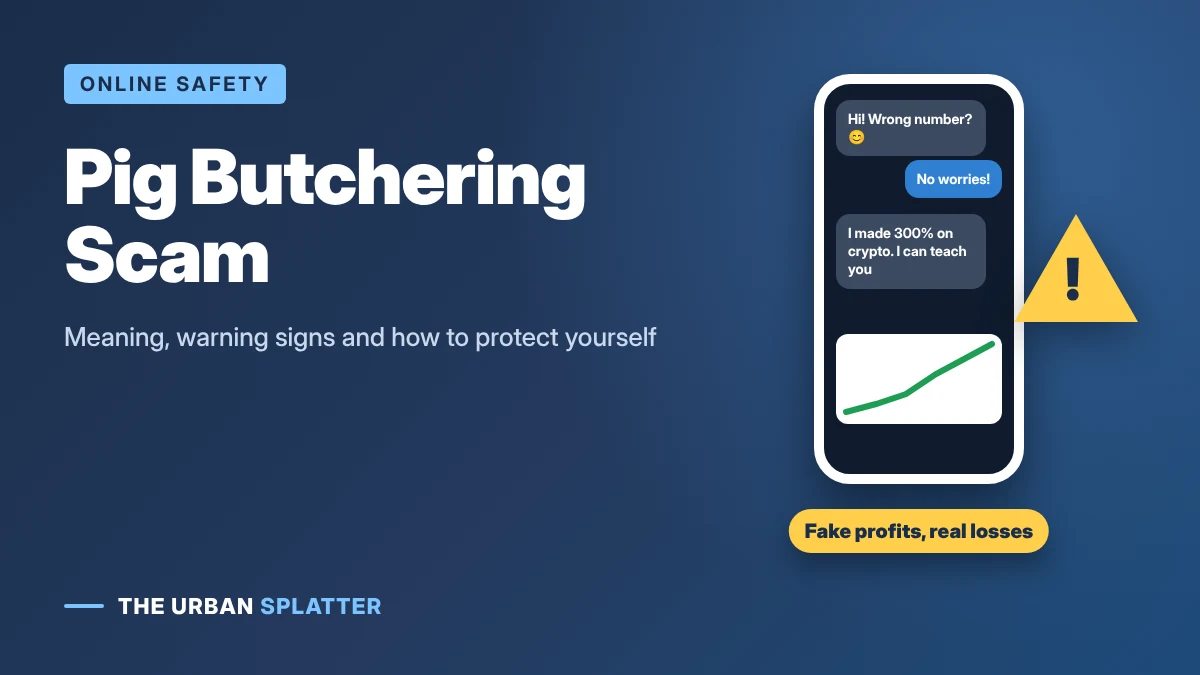
A pig butchering scam is a long-con fraud where a scammer builds a friendship or romance with you online, then persuades you to “invest” in a fake cryptocurrency or trading platform. The name comes from the Chinese phrase sha zhu pan, which compares the victim to a pig that is fattened up before slaughter. Victims often lose their life savings. This guide explains the pig butchering scam meaning, how it works, the warning signs and what to do if you have been targeted.
In this article
Pig Butchering Scam Meaning
The scammer “fattens” the victim with attention, trust and fake profits, then “butchers” them by taking everything they have invested. Unlike quick scams, a pig butchering scam can run for weeks or months before the money disappears.
How a Pig Butchering Scam Works
- First contact. A stranger reaches out through a “wrong number” text, a dating app, social media or a messaging app such as WhatsApp or Telegram.
- Building trust. They chat daily, share photos of a successful lifestyle and may become a friend or romantic partner.
- The investment pitch. They mention that they make money trading crypto, gold or forex, and offer to teach you.
- The fake platform. You are sent to a website or app that looks real and shows your “profits” growing quickly.
- Bigger deposits. Small early withdrawals may be allowed to build confidence, then you are pushed to invest more, sometimes by borrowing money.
- The trap closes. When you try to withdraw, you are told to pay “taxes” or “fees” first. In the end, the site disappears and the scammer stops replying.
The FBI’s Internet Crime Complaint Center has warned about these schemes and notes that losses have ranged from tens of thousands to millions of dollars.
Warning Signs of a Pig Butchering Scam
- A stranger contacts you “by accident” and keeps chatting
- A new online friend or partner quickly brings up investing or crypto
- They refuse video calls or always have an excuse not to meet
- Promises of guaranteed or very fast, large returns
- An investment website or app you cannot find in official app stores or reviews
- Website addresses that are slightly misspelled versions of real exchanges
- Pressure to invest more, keep it secret or act before an opportunity “closes”
- Being asked to pay fees or taxes before you can withdraw your money
How to Protect Yourself
- Never invest based on advice from someone you have only met online.
- Check any platform independently. Look it up with regulators and on trusted review sites, and type the address yourself.
- Only use well-known, regulated exchanges and download apps from official app stores.
- Be suspicious of anyone who moves the chat to another app or asks you to keep it private.
- Talk to a trusted friend or family member before sending money.
- Remember: if it sounds too good to be true, it almost certainly is. Scammers may also call from fake numbers; here is how caller ID spoofing works.
What to Do If You Have Been Scammed
- Stop sending money, including any “fees” to unlock withdrawals.
- Save everything: chat logs, usernames, phone numbers, website addresses, wallet addresses and transaction records.
- Contact your bank or the exchange you used straight away. They may be able to freeze or flag transfers.
- In the US, report it to the FBI at ic3.gov and to the FTC at ReportFraud.ftc.gov. In other countries, contact the police and your national fraud or cybercrime reporting service.
- Beware of “recovery” scams. People who promise to get your money back for an upfront fee are often scammers too.
Being scammed is not a sign of foolishness. These schemes are run by organized groups using scripts designed to manipulate people, and many victims are educated and careful.
Frequently Asked Questions
Why is it called pig butchering?
It translates the Chinese term sha zhu pan (“pig-killing plate”). Scammers describe victims as pigs that they fatten with trust before taking their money.
Is pig butchering only about crypto?
Most cases involve cryptocurrency, but some use fake gold, forex or stock trading platforms. Scammers also hide fake links in QR codes; learn what QR stands for and how to scan safely.
Can I get my money back?
Recovery is difficult, especially with crypto, but reporting quickly to your bank, the exchange and law enforcement gives you the best chance.
Who do pig butchering scammers target?
Anyone. People of all ages and backgrounds have been targeted, including through professional networking sites and dating apps.
Final Thoughts
A pig butchering scam combines a fake relationship with a fake investment. The best defense is simple: never invest with someone you have only met online, and check every platform yourself. For more online safety guides, explore the latest articles on The Urban Splatter.
This article is for general information only and is not financial or legal advice.