A crypto whitepaper is the document a project publishes to explain what it is building, how its technology works and how its token is supposed to function. The most famous one, the Bitcoin whitepaper, was published on October 31, 2008, and turned 18 on October 31, 2026. This guide explains what a whitepaper is, what a good one should include, how to read one step by step and the red flags that can warn you about a weak or fraudulent project.
Note: this article is for education only and is not financial advice. Crypto assets are risky and can lose most or all of their value.
In this article
What Is a Whitepaper?
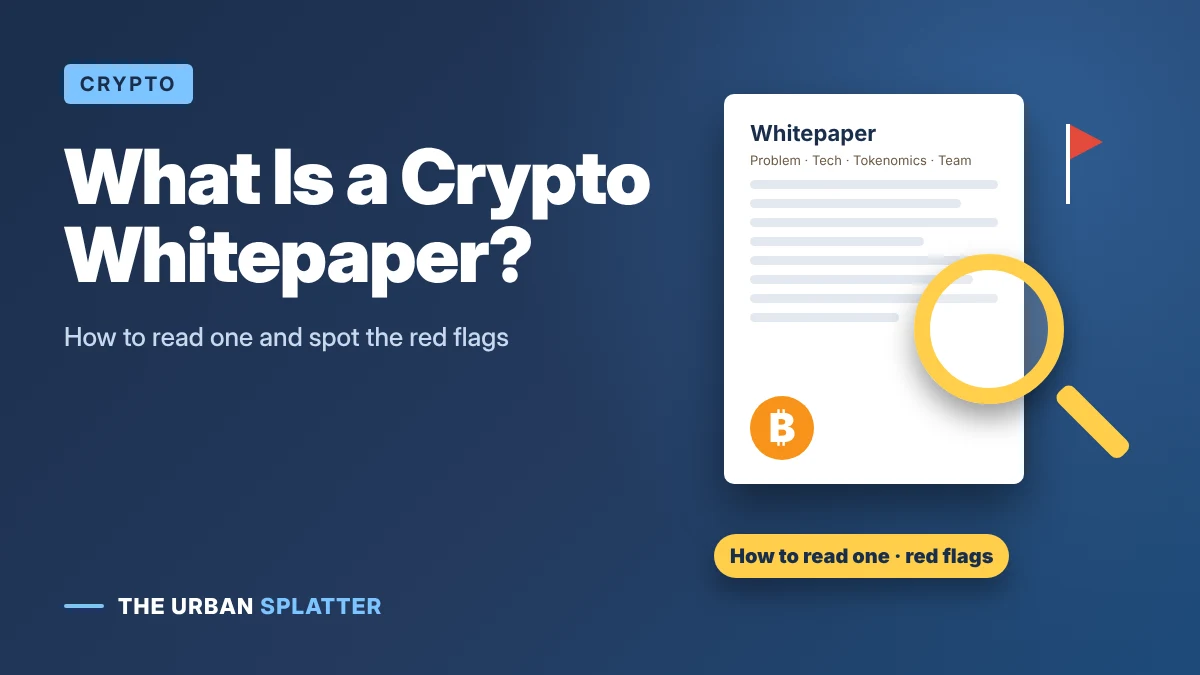
Outside crypto, a white paper is an in-depth report that explains a problem and a proposed solution, often used by governments and businesses. In crypto, the whitepaper became the standard way for a new blockchain or token to describe itself: its purpose, its technical design, its token supply and its plans. It is not a legal contract, and it is not audited by any regulator.
The Bitcoin Whitepaper
Titled “Bitcoin: A Peer-to-Peer Electronic Cash System,” the Bitcoin whitepaper was posted by the pseudonymous Satoshi Nakamoto to a cryptography mailing list on October 31, 2008. As The Block reported, the email linked to a nine-page paper describing a cash system that was fully peer-to-peer with no trusted third party, and the Bitcoin network went live on January 3, 2009.
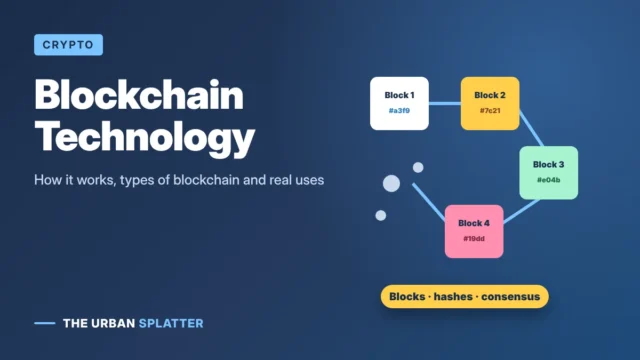
The paper explained how proof of work, timestamps and a chain of blocks could stop people from spending the same coin twice without a bank. It is short, technical and focused on solving one problem, which is part of why it is still admired.
What a Good Crypto Whitepaper Includes
| Section | What to look for |
|---|---|
| Problem | A real problem, explained clearly. Why is a blockchain needed at all? |
| Solution and technology | How the system works: consensus method, architecture, security. Enough detail for experts to check. |
| Token role (utility) | What the token is actually used for, and why the project needs its own token. |
| Tokenomics | Total supply, how tokens are created and released, how much goes to the team and investors, and lock-up (vesting) periods. |
| Team | Who is building it, with verifiable backgrounds. (Bitcoin is a famous exception: its creator is anonymous.) |
| Roadmap | Realistic milestones with dates. What has already been delivered? |
| Risks | An honest section on technical, legal and market risks. |
How to Read a Whitepaper Step by Step
- Start with the summary. Can you explain the project in one sentence after reading the abstract? If not, that is a warning sign.
- Find the problem. Ask whether the problem is real and whether a blockchain is the best way to solve it.
- Read the technical section slowly. You do not need to understand every formula, but the design should be specific, not vague buzzwords.
- Study the tokenomics. Look at supply, inflation, and how many tokens insiders hold and when they can sell.
- Check the team and backers. Search their names, past projects and public profiles.
- Compare the roadmap with reality. Check the project’s code repository, product and announcements against what the paper promised.
- Look for outside opinions. Search for independent reviews, security audits and criticism, not just the project’s own marketing.
Red Flags in a Crypto Whitepaper
- Guaranteed returns: promises of fixed profits or “can’t lose” gains are a classic scam sign.
- Buzzwords with no detail: “AI-powered, quantum-secure, revolutionary DeFi ecosystem” with no explanation of how.
- Copied text: paste a few sentences into a search engine; plagiarized whitepapers are common in low-effort projects.
- Unclear token use: if the token has no real role, its value depends only on hype.
- Huge insider allocations: a team or “private sale” holding a large share with no lock-up can sell on buyers.
- Anonymous team plus big promises: anonymity alone is not proof of fraud, but combined with hype it is risky.
- Pressure to buy fast: countdown timers, “presale ending” messages and influencer pressure.
- No updates: a whitepaper that was never revised while the roadmap quietly slipped.
Famous Crypto Whitepapers
- Bitcoin (2008): Satoshi Nakamoto’s peer-to-peer electronic cash system.
- Ethereum (2013): Vitalik Buterin’s proposal for a blockchain that can run smart contracts and applications.
- Many later projects published whitepapers during the 2017 initial coin offering (ICO) boom, and many of those projects later failed, which is why careful reading matters.
Frequently Asked Questions
Is a whitepaper legally binding?
Usually not. A whitepaper is a description and a plan. It does not guarantee results, and projects can change direction.
Where can I find a project’s whitepaper?
On the project’s official website, usually under “Docs,” “Whitepaper” or “Litepaper.” Make sure you are on the real site, because scammers copy them.
What is a litepaper?
A shorter, simpler version of a whitepaper, written for general readers rather than developers.
Does a good whitepaper mean a good investment?
No. A well-written whitepaper is a good sign, but price depends on adoption, competition, regulation and market sentiment. Never invest more than you can afford to lose.
Key Takeaways
A crypto whitepaper explains a project’s problem, technology, token and plans. Read it slowly, focus on tokenomics and real-world progress, and treat guaranteed returns, vague buzzwords and pressure tactics as red flags. For more plain-English crypto guides, explore the latest articles on The Urban Splatter.
This article is for educational purposes only and is not financial advice.