Lackadaisical is an adjective that describes someone or something lacking energy, interest, or care. A lackadaisical attempt is a halfhearted one. The word is mildly critical: it suggests a casual, unenthusiastic way of doing things, not a deliberate decision to do them badly.
Example: He took a lackadaisical approach to the job search and sent only two applications in a month.
Definition
Dictionaries give two closely related senses:
- Without interest, vigor, or determination; listless or halfhearted. Dictionary.com lists this as the first sense.
- Lazy or indolent, especially in a dreamy, relaxed way.
The Oxford Learner's Dictionaries entry puts it plainly as "not showing enough care or enthusiasm." In everyday writing, the first sense is the one you will meet most often, usually before words like attitude, approach, effort, or defense.
Word forms: the adverb is lackadaisically, and the noun is lackadaisicalness. The word is an adjective only, so you cannot say "he lackadaisicaled through the meeting."
Pronunciation
Say it as lak-uh-DAY-zih-kul, with the stress on the third syllable. In the International Phonetic Alphabet it is written /ˌlækəˈdeɪzɪkəl/. It has five syllables: lack-a-dai-si-cal.
The first two syllables rhyme with "back a". They are the same "lack" as in "lack of effort", which helps with spelling too.
Where the word comes from
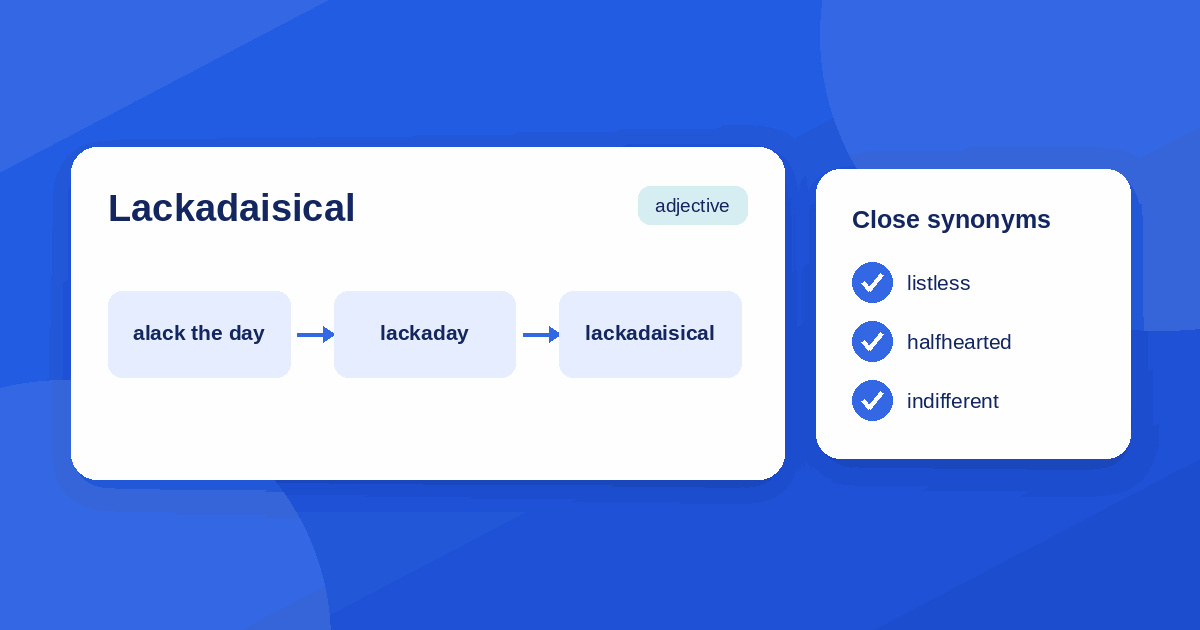
The word comes from lackaday, an old interjection of regret meaning something like "alas". It is a shortened form of the phrase "alack the day". A variant, lackadaisy, was used the same way, and adding the suffix -ical gave lackadaisical. Dictionary.com dates the word to about 1760 to 1770, and Oxford notes that it first carried the sense "feebly sentimental" in the mid-18th century.
The idea is a person who sighs "alack the day" at everything: wistful, a little weary, and not inclined to push on with anything. Over time the meaning moved from sentimental languor to simple lack of effort.
Despite how it looks, the word has nothing to do with daisies. The "daisy" in it is a trick of the sound.
Example sentences
- The team's lackadaisical defense gave up three goals in the first half.
- She answered emails in a lackadaisical way, sometimes a week late.
- After lunch, the whole office felt lackadaisical in the summer heat.
- His lackadaisical attitude toward deadlines worried his manager.
- They drifted lackadaisically through the museum, barely reading the signs.
- A lackadaisical safety check is worse than none, because it creates false confidence.
- I felt lackadaisical about the project until the client called.
- The students gave a lackadaisical performance, as if the rehearsal did not matter.
Notice that the examples are about effort and attention. If someone is simply relaxed and happy, a different word fits better.
Synonyms and antonyms
| Close synonyms | Softer or milder | Antonyms |
|---|---|---|
| listless, halfhearted, lethargic | casual, relaxed, easygoing | energetic, vigorous, spirited |
| apathetic, indifferent, unenthusiastic | languid, laid-back, unhurried | diligent, conscientious, careful |
| sluggish, lax, careless | dreamy, leisurely | attentive, enthusiastic, determined |
Choose by what you want to say. Listless points to low energy, careless to low attention, and apathetic to low interest. Lackadaisical covers a little of all three, which is why it is handy and also why it can sound vague.
Lackadaisical vs similar words
- Lazy means unwilling to work. A lazy person avoids effort. A lackadaisical person may be present and willing but goes about things without energy or care.
- Nonchalant means calm and unconcerned, often in a way that looks cool. It is often a compliment. Lackadaisical is rarely one.
- Laid-back is relaxed and comfortable, usually positive. A laid-back manager is easy to work with. A lackadaisical manager lets standards slip.
- Apathetic means feeling no interest at all. Lackadaisical can describe how someone acts even when they care a little.
- Negligent means failing to take proper care, often with legal weight. Lackadaisical describes the attitude. Negligent describes the failure.
As Dictionary.com's own explanation notes, lackadaisical is more of a dreamy, laid-back approach than sheer laziness.
Spelling and pronunciation mistakes
- Laxadaisical, laxidasical, lacksadaisical. These spellings come from thinking of "lax". The word starts with "lack".
- Lackadaisycal. The ending is -ical, as in "logical".
- Lackadasical or lackadazical. Keep the "ai" in the middle: lackadaisical.
- A "lax" sound. The American Heritage Dictionary notes that some speakers say it as if spelled lacksadaisical. It is common, but the traditional pronunciation is the safer choice.
A memory trick: it is "lack a day", as in someone who lacks energy for the day.
Using it well
Because the word is critical, it works best when you can point to the behavior. "Lackadaisical effort" tells the reader something specific. "Lackadaisical person" is a judgment of character and can sound harsh. In reviews, reports, and emails, it helps to describe what happened and reserve the word for the pattern.
- Prefer: "The handover notes were lackadaisical: two sections were left blank."
- Avoid: "Our new hire is lackadaisical." That is a label, not feedback.
When you want to be gentler, use unhurried, relaxed, or low-key. When you want to be firmer, use negligent or careless.
Frequently asked questions
What does lackadaisical mean in one sentence? It describes doing something with little energy, interest, or care.
Is lackadaisical a negative word? Usually, yes. It suggests that effort or attention is lacking. In a few contexts, such as a relaxed weekend, it can sound neutral or gently humorous, but most writers use it as mild criticism.
Is lackadaisical the same as lazy? Not exactly. Lazy means unwilling to make an effort. Lackadaisical describes a halfhearted, careless way of doing something, even by someone who is present and trying a little.
What part of speech is lackadaisical? It is an adjective. The adverb is lackadaisically and the noun is lackadaisicalness.
How do you pronounce it? lak-uh-DAY-zih-kul, with the stress on "day".
Where does lackadaisical come from? It developed from lackaday, an old exclamation of regret, itself a shortening of "alack the day".
Can you describe a thing as lackadaisical, not just a person? Yes. People often describe an effort, attitude, approach, response, or performance as lackadaisical, and the word works well for processes such as a lackadaisical security check or review.
What is a good antonym? Energetic, diligent, and conscientious are all common opposites, depending on whether you mean energy, care, or attention.
A quick usage test
Choose the best word for each sentence. The answers are below.
- The manager was frustrated by the team's ______ response to the customer complaint. (lackadaisical / meticulous)
- After weeks of training, the players were ______ and ready for the final. (lackadaisical / focused)
- He gave a ______ shrug and went back to his phone. (lackadaisical / determined)
- The inspector criticized the ______ way the safety logs were kept. (lackadaisical / thorough)
Answers: 1 lackadaisical, 2 focused, 3 lackadaisical, 4 lackadaisical. Words like meticulous, focused, determined and thorough are opposites of lackadaisical, so they would reverse the meaning of the sentence.
The takeaway
Lackadaisical means lacking energy, enthusiasm, or care, and it comes from the old cry "alack the day". Say lak-uh-DAY-zih-kul, spell it with "lack" at the front, and use it for effort and attitude rather than as a verdict on a person. If you need a close synonym, try listless, halfhearted, or indifferent.