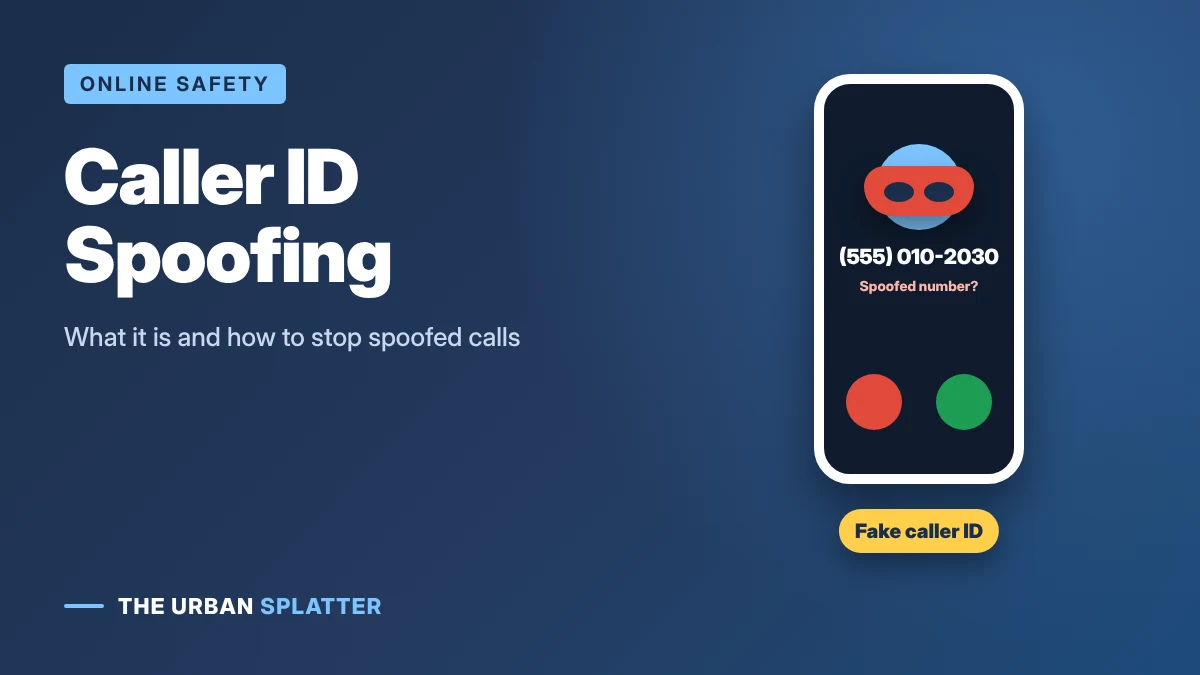
A spoofing caller is someone who fakes the number that shows up on your caller ID. The call might look like it comes from your bank, a government office, a local number or even your own number, when it is really a scammer or robocaller. This guide explains what caller ID spoofing is, why scammers do it, whether it is illegal and how to stop spoofed calls on your phone.
In this article
What Is Caller ID Spoofing?
Caller ID spoofing is when a caller deliberately changes the number displayed on your screen so it is different from the number the call really comes from. As the Massachusetts government consumer guide notes, spoofing has been used to impersonate banks and tax agencies in order to steal personal and financial information.
Spoofing is easy because internet calling technology lets callers type in almost any number they like. That is why you cannot trust caller ID alone.
Common Types of Spoofed Calls
| Type | What it looks like |
|---|---|
| Neighbor spoofing | A number with your own area code and first digits, so it looks local |
| Bank or card fraud calls | Your bank’s real number, with a warning about “suspicious activity” |
| Government impersonation | A tax office, police, immigration or social security number demanding payment |
| Tech support scams | A well-known tech company saying your computer has a virus |
| Your own number | A call that appears to come from your own phone number |
| Delivery or utility scams | A courier or power company threatening to cancel a service |
Is Caller ID Spoofing Illegal?
In the United States, the Truth in Caller ID Act makes it illegal to spoof caller ID with the intent to defraud, cause harm or wrongly obtain anything of value. Not all spoofing is illegal. For example, a doctor calling from a personal phone may show the clinic’s main number. What matters is the intent. Many other countries have similar laws, and phone regulators are increasingly requiring carriers to block spoofed calls.
How Carriers Fight Spoofing (STIR/SHAKEN)
In the US, the FCC requires major phone carriers to use a technology called STIR/SHAKEN, which digitally checks whether a call really comes from the number shown. When a call passes the check, some phones show “Verified” or a check mark. Calls that fail may be labeled “Spam Likely” or “Scam Likely”. It helps, but scammers still get through, especially from overseas.
How to Stop Spoofed Calls
On iPhone
- Go to Settings → Apps → Phone (or Settings → Phone on older iOS) and turn on Silence Unknown Callers.
- Newer iOS versions also offer Screen Unknown Callers, which asks callers for their name and reason before your phone rings.
- Install your carrier’s free spam-blocking app, or a reputable call-blocking app, and enable it under Call Blocking & Identification.
On Android
- Open the Phone app → Settings → Caller ID & spam, and turn on Filter spam calls.
- On Pixel phones, use Call Screen to let Google answer unknown numbers.
- On Samsung phones, open Phone → Settings → Caller ID and spam protection.
Everywhere
- Turn on your carrier’s free spam protection, such as AT&T ActiveArmor, Verizon Call Filter or T-Mobile Scam Shield.
- Register your number on your country’s Do Not Call list. It will not stop scammers, but it cuts legal telemarketing calls.
- Let unknown numbers go to voicemail.
What to Do If You Get a Spoofed Call
- Do not give personal information, passwords, one-time codes or payment details.
- Hang up, then call the organization back using the number on its official website or the back of your card.
- Do not press buttons to “opt out”, because that can confirm your number is active.
- Be suspicious of urgency, threats or requests for gift cards, wire transfers or crypto. Callers pushing crypto investments may be running a pig butchering scam.
- If someone is calling from your own number, ignore it. Your number has not been hacked; it has just been spoofed.
How to Report Spoofed Calls
In the US, file a complaint with the FCC at consumercomplaints.fcc.gov or call 1-888-225-5322, and report scam calls to the FTC at ReportFraud.ftc.gov. If you shared bank details, call your bank immediately. In other countries, report to your telecom regulator or national fraud center.
Frequently Asked Questions
Can I tell if a call is spoofed?
Not always. Warning signs include calls from your own number, numbers that are almost the same as yours and callers who pressure you to act quickly.
Why am I getting calls from my own number?
Scammers spoof your number to make you curious enough to answer. Your phone and account are usually fine.
Can someone spoof my number to call others?
Yes. If people say you called them when you did not, your number was probably spoofed. It usually stops on its own, but you can tell your carrier.
Does blocking a spoofed number help?
Only a little, because scammers change numbers constantly. Spam filters and silencing unknown callers work better.
Final Thoughts
Caller ID spoofing makes scam calls look trustworthy, so treat every unexpected call with caution, never share codes or payment details and call back on an official number. Turning on your phone’s spam filters will stop many spoofed calls before they reach you. For more online safety guides, explore the latest articles on The Urban Splatter.