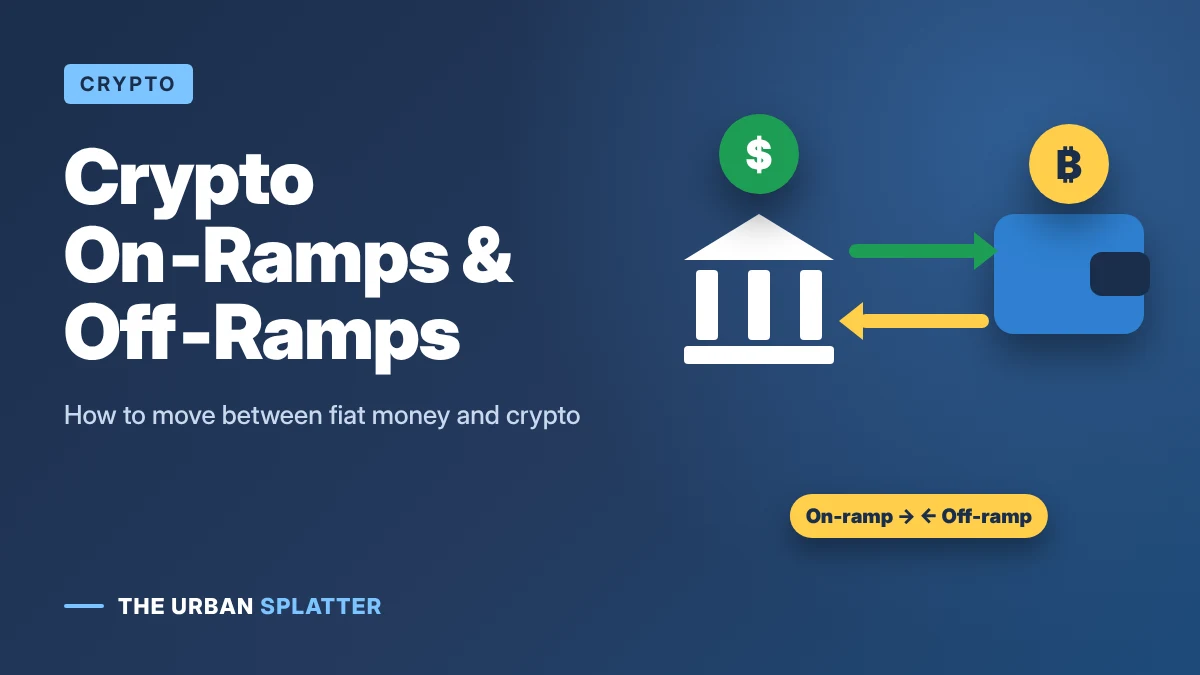
A crypto on-ramp is any service that lets you turn regular money (fiat, such as US dollars, euros or rupees) into cryptocurrency. An off-ramp does the opposite: it turns crypto back into fiat money in your bank account. Some people also search for an “offramp bridge”, meaning a tool that moves crypto off a blockchain and into regular money. This guide explains crypto on-ramps and off-ramps, the main types, fees, KYC checks and how to cash out safely.
In this article
What Is a Crypto On-Ramp?
An on-ramp is your entry point into crypto. You pay with a bank transfer, debit card, credit card or mobile payment, and receive crypto in an account or wallet. Common examples include centralized exchanges, in-wallet “Buy” buttons, fintech and payment apps, and crypto ATMs.
What Is a Crypto Off-Ramp?
An off-ramp is your exit. You sell or send crypto and receive fiat money, usually by bank transfer, card payout or cash. Exchanges are the most common off-ramp, but peer-to-peer (P2P) marketplaces, crypto debit cards and some ATMs also work.
Types of On-Ramps and Off-Ramps
| Type | How it works | Things to watch |
|---|---|---|
| Centralized exchange | Deposit fiat, buy or sell crypto, withdraw to your bank | Identity checks; withdrawal limits; trading fees |
| Wallet “Buy” / “Sell” button | A partner payment provider handles the card or bank payment inside your wallet app | Often higher fees for convenience |
| Peer-to-peer (P2P) | Trade directly with another person, usually with escrow | Higher scam risk; use only reputable platforms with escrow |
| Crypto ATM | Buy or sell crypto for cash at a machine | High fees; a common tool in scams |
| Crypto debit card | Spend crypto; it is converted to fiat at checkout | Conversion fees; card rules vary by country |
| Stablecoin off-ramp | Convert crypto to a stablecoin, then redeem for dollars through an issuer or exchange | Check the stablecoin’s reserves and redemption rules |
What Is an Off-Ramp Bridge?
A blockchain bridge moves tokens from one blockchain to another, for example from Ethereum to another network. An “off-ramp bridge” usually means a service that combines this with an off-ramp: it moves your tokens to a network your exchange supports, then converts them to fiat. Bridges have been a major target for hackers, so use well-known services and send a small test amount first.
KYC: Why You Need to Verify Your Identity
Most regulated on-ramps and off-ramps must follow Know Your Customer (KYC) and anti-money laundering rules. Expect to provide a photo ID, a selfie and sometimes proof of address before you can deposit or withdraw. Larger amounts may need extra checks. This protects the platform and helps prevent fraud.
Fees to Expect
- Trading or service fees: a percentage of each buy or sell.
- Spread: the gap between the buy and sell price, which is often a hidden cost.
- Card fees: card purchases usually cost more than bank transfers.
- Network (gas) fees: charged by the blockchain when you move crypto.
- Withdrawal fees: charged by some platforms when you send money to your bank.
How to Cash Out Crypto Safely: Step by Step
- Choose a reputable, regulated exchange that supports your country and bank.
- Complete identity verification (KYC).
- Send your crypto from your wallet to your exchange deposit address. Double-check the address and the network, and try a small test first.
- Sell the crypto for your local currency, or for a stablecoin first if you prefer.
- Withdraw the money to your linked bank account.
- Keep records of every transaction for tax purposes. Not sure which coins are pegged? Here is what a stablecoin is.
Safety Tips
- Never send crypto to someone who promises to “unlock” or “release” your funds for a fee. This is a classic sign of a pig butchering scam.
- Be very careful with crypto ATMs: scammers often tell victims to deposit cash at one.
- Only use official apps and type website addresses yourself.
- Turn on two-factor authentication on your exchange account.
- Remember that selling crypto may be a taxable event in many countries.
Frequently Asked Questions
What is the cheapest way to buy crypto?
Usually a bank transfer to a regulated exchange, since card purchases and in-wallet buy buttons tend to charge more.
How long does it take to cash out crypto?
Selling is instant on most exchanges, but bank withdrawals can take from minutes to a few business days, depending on your country and bank.
Can I off-ramp crypto without KYC?
Some P2P platforms allow it for small amounts, but regulated services require identity checks, and no-KYC options carry higher scam and legal risks.
What does fiat mean?
Fiat money is government-issued currency, such as the US dollar, euro or Pakistani rupee, that is not backed by a commodity like gold.
Final Thoughts
On-ramps take you from regular money into crypto, and off-ramps take you back out. Choose regulated services, verify your identity, watch the fees and always test with a small amount first. For more plain-English crypto guides, explore the latest articles on The Urban Splatter.
This article is for general information only and is not financial, investment or tax advice.