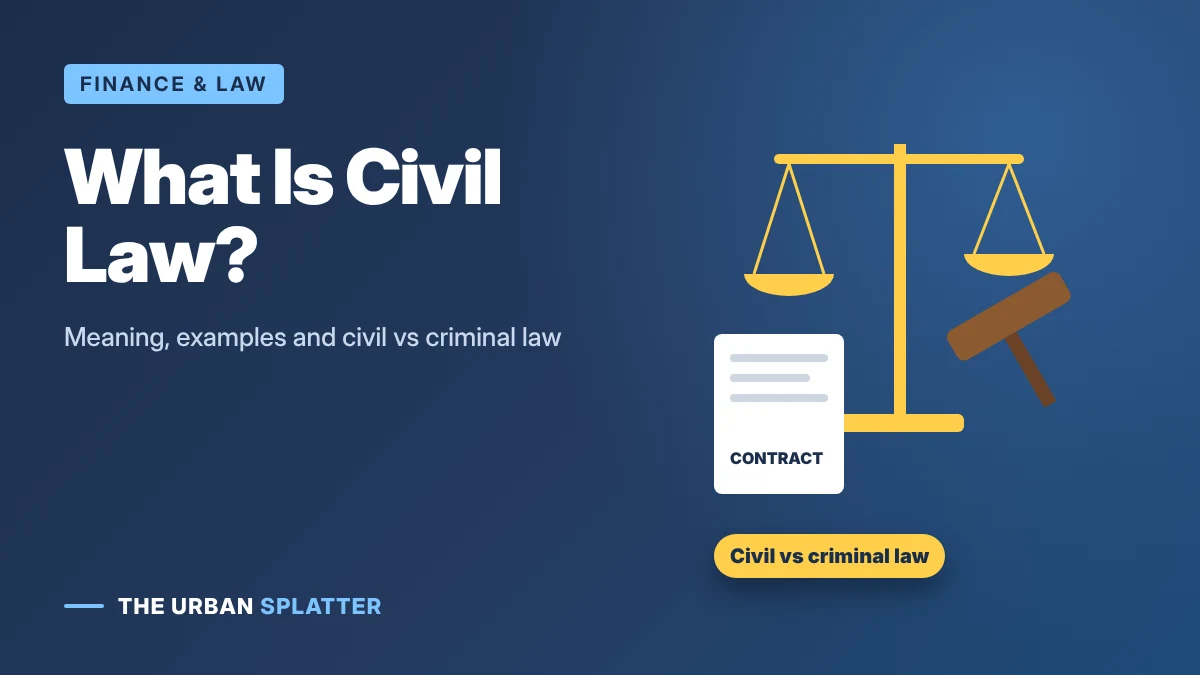
Civil law is the area of law that deals with disputes between people and organizations, such as broken contracts, injuries, property disagreements and family matters. Instead of punishing a crime, a civil case usually aims to compensate someone or settle their rights. The term “civil law” also has a second meaning: a type of legal system used in much of Europe and Latin America. This guide explains both meanings, gives examples, compares civil and criminal law and covers when you might need a civil law attorney.
Note: this article is general information, not legal advice. Laws and procedures differ by country and state.
In this article
Civil Law Meaning
In the United States and other common law countries, civil law usually means private disputes. According to the U.S. Courts, a civil case begins when a person or business claims that another has failed to carry out a legal duty owed to them. The person who sues is the plaintiff; the person being sued is the defendant.
Civil cases can be between individuals, businesses or even a government and a private party. The usual result is money damages, a court order telling someone to do or stop doing something, or a ruling on rights such as custody or ownership.
Main Areas of Civil Law
| Area | Examples |
|---|---|
| Contract law | A supplier fails to deliver goods; a tenant breaks a lease |
| Tort law | Car accident injuries, slip and fall, defamation, medical malpractice |
| Property law | Boundary disputes, landlord and tenant issues, title problems |
| Family law | Divorce, child custody, child support, adoption |
| Employment law | Wrongful termination, unpaid wages, discrimination claims |
| Consumer law | Defective products, unfair debt collection |
| Estates and probate | Disputes over wills, trusts and inheritance |
Civil Law vs Criminal Law
| Civil law | Criminal law | |
|---|---|---|
| Purpose | Resolve disputes and compensate harm | Punish and deter crimes against society |
| Who brings the case | The injured person or business (plaintiff) | The government (prosecutor) |
| Burden of proof | Usually “preponderance of the evidence” (more likely than not) | “Beyond a reasonable doubt” |
| Possible outcomes | Money damages, court orders, custody rulings | Fines, probation, prison |
| Right to a lawyer if you cannot afford one | Generally no (with some exceptions) | Yes, for many charges |
| Example | Suing a driver for medical bills | Charging a driver with drunk driving |
The same event can lead to both. A drunk driver who injures someone can face a criminal case brought by the state and a separate civil case brought by the victim. In criminal cases, as the U.S. Courts explain, the government must prove guilt beyond a reasonable doubt, a much higher standard than in civil cases.
How a Civil Case Works
- Demand or negotiation: many disputes start with a demand letter and are settled without going to court.
- Filing a complaint: the plaintiff files a complaint with the court and serves it on the defendant.
- Answer: the defendant responds, and may file a counterclaim.
- Discovery: both sides exchange documents, ask written questions and take depositions (sworn interviews).
- Settlement or mediation: most civil cases settle before trial.
- Trial: a judge or jury decides the case.
- Judgment and appeal: the losing side may appeal; the winner may need to take steps to collect.
Small claims court is a simpler civil court for smaller amounts. Limits vary by state, and people often represent themselves.
Civil Law as a Legal System
Outside the United States, “civil law” often refers to a legal system based mainly on written codes, such as France’s Napoleonic Code or Germany’s civil code. It is used across most of continental Europe, Latin America and parts of Asia and Africa. Judges in civil law systems mainly apply the written code, while in common law systems, such as the United States, the United Kingdom and Canada (except Quebec), past court decisions (precedent) also play a major role. Louisiana’s state law is partly based on the civil law tradition.
When to Hire a Civil Law Attorney
- You have been seriously injured and the other side’s insurer is involved
- Someone is suing you, or you have received court papers
- A business deal or contract has gone wrong and a lot of money is at stake
- You face a landlord, employment or family dispute you cannot settle
- A deadline (statute of limitations) is approaching
Many personal injury attorneys work on contingency, meaning they are paid a share of any recovery. Others charge hourly or flat fees. Local bar associations often run lawyer referral services.
Frequently Asked Questions
Can you go to jail in a civil case?
Not for losing a civil case itself. However, ignoring a court order can lead to contempt of court, which can carry penalties.
What is a tort?
A tort is a wrongful act, other than a breach of contract, that causes harm to someone and can lead to a civil lawsuit, such as negligence or defamation.
How long do I have to file a civil lawsuit?
It depends on the type of claim and the state. These deadlines, called statutes of limitations, can be as short as one or two years.
Is divorce civil law?
Yes. Divorce, custody and support cases are part of family law, which is a branch of civil law. Even an informal marriage can need a divorce; see how common law marriage works.
Key Takeaways
Civil law covers disputes between people and organizations and focuses on compensation and rights, while criminal law punishes offenses against society. The burden of proof is lower in civil cases, and most settle before trial. If a lot is at stake, talk to a qualified attorney. For more plain-English legal guides, explore the latest articles on The Urban Splatter.
This article is for general information only and is not legal advice.