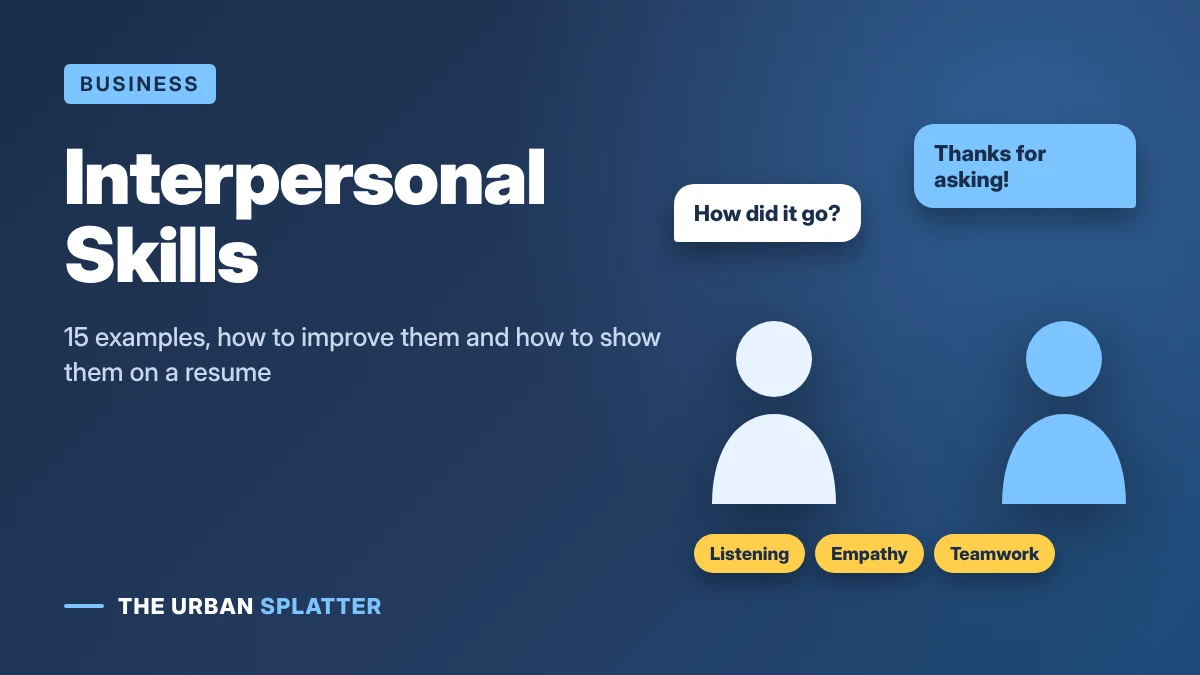
Interpersonal skills are the abilities people use to communicate and work well with others, such as listening, empathy, teamwork and handling conflict. They are often called people skills or soft skills, and employers rank them among the most important qualities in new hires. This guide explains what interpersonal skills are, 15 interpersonal skills examples, how to improve interpersonal skills and how to show them on a resume and in interviews.
In this article
- What Are Interpersonal Skills?
- Why Interpersonal Skills Matter
- 15 Interpersonal Skills Examples
- How to Improve Interpersonal Skills
- Interpersonal Skills for Your Resume
- How to Show Interpersonal Skills in an Interview
- Interpersonal Skills and Emotional Intelligence
- Frequently Asked Questions
- Practice One Skill This Week
What Are Interpersonal Skills?
Interpersonal skills are the behaviors and habits that help you interact with other people effectively. They include how you listen, speak, cooperate, resolve disagreements and build trust. Strong interpersonal skills make it easier to work in teams, serve customers, lead others and keep good relationships at home and at work.
They differ from intrapersonal skills, which are about understanding and managing yourself. The two support each other: knowing your own reactions makes it easier to handle other people well.
Why Interpersonal Skills Matter
Employers consistently look for them. In the National Association of Colleges and Employers (NACE) Job Outlook 2026 Spring Update, a survey of 185 employers, the ability to work in a team, problem-solving and effective communication were named the top skills employers want to see on new graduates’ resumes. Two of those three are interpersonal skills. These teamwork tips put the same skills into practice.
Outside work, the same skills help people make friends, handle family disagreements and get support when they need it.
15 Interpersonal Skills Examples
| Skill | What it looks like | Example at work |
|---|---|---|
| Active listening | Giving full attention and checking you understood | “So the main issue is the deadline, right?” |
| Verbal communication | Speaking clearly and to the point | Explaining a plan in a two-minute update |
| Written communication | Clear, polite emails and messages | A short email with the key point first |
| Empathy | Understanding how others feel | Noticing a stressed teammate and offering help |
| Teamwork | Working toward shared goals | Helping a colleague finish a project on time |
| Conflict resolution | Handling disagreements calmly | Finding a compromise between two plans |
| Collaboration | Sharing ideas and credit | Building on someone else’s idea in a meeting |
| Patience | Staying calm when things move slowly | Walking a new hire through a task twice |
| Respect | Valuing others’ time and views | Letting people finish before you reply |
| Giving feedback | Helping others improve kindly | Pointing out an error privately with a fix. Here is how to give constructive criticism that people can act on. |
| Receiving feedback | Listening without getting defensive | Thanking a manager for suggestions |
| Negotiation | Reaching agreements that work for both sides | Agreeing a new deadline with a client |
| Positivity | Bringing steady, constructive energy | Focusing a stressed team on next steps |
| Leadership | Guiding and motivating others | Organizing a team around a clear goal |
| Reliability | Doing what you say you will do | Sending meeting notes when promised |
How to Improve Interpersonal Skills
- Practice active listening. In your next conversation, repeat back the main point before giving your view.
- Ask more questions. “What do you think?” and “How did that go?” show interest and build connection.
- Notice body language. Eye contact, an open posture and nodding signal that you are engaged.
- Ask for feedback. Ask a trusted colleague: “How do I come across in meetings?”
- Handle conflict early. Raise small issues calmly before they grow.
- Give credit generously. Name the people who helped, out loud and in writing.
- Put yourself in new situations. Join a club, volunteer or lead a small project to practice with new people. The icebreaker questions make a good, low-pressure start.
- Reflect after key conversations. Ask yourself what went well and what you would say differently. If a conversation goes wrong, here is how to apologize sincerely.
Interpersonal Skills for Your Resume
Listing “great people skills” on a resume says little. Show the skill through results instead:
- Teamwork: “Worked with a five-person team to launch a new product two weeks early.”
- Communication: “Presented weekly updates to a 20-person department.”
- Conflict resolution: “Resolved customer complaints, keeping satisfaction scores above target.”
- Leadership: “Trained and mentored three new team members.”
Add two or three named skills to a skills section as well, matching words from the job description where they are true for you.
How to Show Interpersonal Skills in an Interview
Interviewers often ask questions such as “Tell me about a time you handled a disagreement.” Use the STAR method: describe the Situation, the Task, the Action you took and the Result.
Example: “Two teammates disagreed on how to present our project (Situation). I needed to get us ready for a client meeting in two days (Task). I set up a short call, let each person explain their view and suggested combining the best parts of both (Action). We presented on time and the client approved the plan (Result).”
Interpersonal Skills and Emotional Intelligence
Interpersonal skills are closely linked to emotional intelligence, the idea popularized by psychologist and science writer Daniel Goleman in his 1995 book Emotional Intelligence. In simple terms, emotional intelligence means recognizing and managing emotions, both your own and other people’s. Empathy and social skills, two of its key parts, are core interpersonal skills.
Frequently Asked Questions
Are interpersonal skills the same as soft skills?
Interpersonal skills are one type of soft skill. Soft skills also include personal qualities such as time management and adaptability.
Can interpersonal skills be learned?
Yes. Like any skill, they improve with practice, feedback and reflection. Small habits, such as asking more questions, make a noticeable difference within weeks.
What is the most important interpersonal skill?
Many people point to active listening, because most other interpersonal skills, from empathy to conflict resolution, depend on understanding what the other person is saying.
What jobs need strong interpersonal skills?
Almost every job does, but they are essential in teaching, healthcare, sales, customer service, management and human resources.
Practice One Skill This Week
Interpersonal skills grow through everyday conversations. Pick one skill from the list, such as active listening, and practice it on purpose this week. For more practical guides on careers and communication, explore the latest articles on The Urban Splatter.