
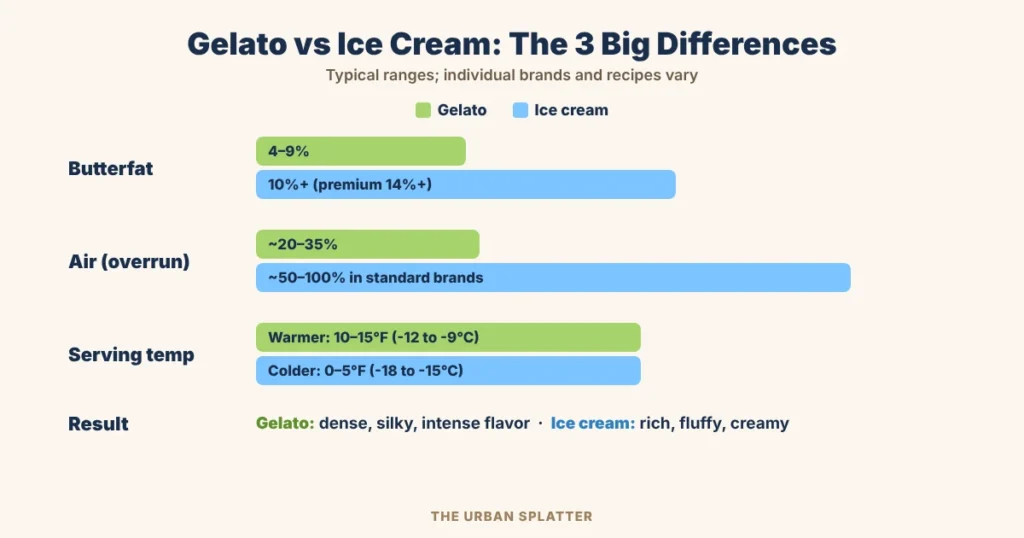
The main difference between gelato and ice cream comes down to fat, air and temperature. Gelato is made with more milk and less cream, so it has less butterfat; it is churned slowly, so it holds less air; and it is served a little warmer, so it tastes softer and more intense. Ice cream is richer in fat, fluffier and served colder. This guide compares the two side by side, explains why gelato tastes the way it does and covers sorbet, frozen custard and which one is “healthier.”
In this article
Gelato vs Ice Cream at a Glance
| Gelato | Ice cream | |
|---|---|---|
| Main dairy | Mostly whole milk, a little cream | Mostly cream, plus milk |
| Butterfat | Usually about 4% to 9% | At least 10% in the US; premium brands often 14% or more |
| Air (overrun) | Low: churned slowly, roughly 20% to 35% air | Medium to high: often 50% to 100% in standard brands |
| Texture | Dense, silky, elastic | Light, creamy, scoopable |
| Serving temperature | Warmer, around 10°F to 15°F (-12°C to -9°C) | Colder, around 0°F to 5°F (-18°C to -15°C) |
| Flavor | Stronger and quicker to hit the tongue | Rounder and creamier, flavors slightly muted |
| Served with | A flat spade, pressed into a cup or cone | A round scoop |
What Is Gelato?
Gelato is the Italian word for frozen dessert, and in Italy it describes the soft, dense treat sold in gelaterias. A typical gelato base uses whole milk, sugar and a smaller amount of cream. Many fruit flavors contain no egg at all, and traditional recipes rely on ingredients such as pistachio paste, hazelnuts, chocolate or fresh fruit for flavor.
Gelato is churned at a slow speed. Less air is whipped in, which keeps it thick. It is also stored and served a few degrees warmer than ice cream, so it stays soft and bends on the spade instead of breaking into hard balls.
What Is Ice Cream?
In the United States, “ice cream” is a legal term. Under the FDA standard of identity, ice cream must contain at least 10% milkfat and weigh at least 4.5 pounds per gallon, according to
Ice cream is churned faster, which adds more air. Food scientists call this added volume “overrun.” Penn State’s food science department notes that dense premium ice creams have about 20% to 40% overrun, while very light products can reach 100%, meaning half the carton is air (
The 3 Key Differences Explained
1. Fat: milk vs cream
Butterfat makes ice cream rich and smooth, and it also coats the tongue. Gelato’s lower fat lets flavors such as pistachio, lemon or dark chocolate come through faster. That is why gelato often tastes “stronger” even though it has less fat.
2. Air: slow churn vs fast churn
With less air, every spoonful of gelato holds more actual dessert. Ice cream’s extra air gives it a light, fluffy bite. A pint of gelato usually feels heavier in the hand than a pint of standard ice cream for this reason.
3. Temperature: warmer vs colder
Very cold food numbs the taste buds a little. Gelato is served around 10°F to 15°F, so it is softer and tastes sweeter and more flavorful. Ice cream is kept colder so its higher fat stays firm enough to scoop.
Which Is Healthier: Gelato or Ice Cream?
Gelato usually has less fat per serving than ice cream, and often fewer calories. It can contain a similar amount of sugar, though, and because it is denser, a scoop can weigh more. Neither is a health food. The fairest comparison is to read the nutrition labels of the two products you are choosing between and compare the same serving size.
Gelato vs Sorbet, Frozen Custard and Frozen Yogurt
- Sorbet (sorbetto in Italian): made with fruit, sugar and water, with no dairy. Many gelaterias sell both side by side.
- Frozen custard: ice cream with added egg yolk. In the US, a product with 1.4% or more egg yolk solids must be labeled frozen custard or French ice cream.
- Sherbet: mostly fruit and sugar with a little dairy, about 1% to 2% milkfat.
- Frozen yogurt: made with cultured milk and not held to the ice cream fat standard, so fat varies widely by brand.
How to Spot Good Gelato
- Natural colors: pistachio should look olive or brownish green, not bright green; banana should be off-white, not yellow.
- Covered or flat tubs: many traditional shops keep gelato in lidded metal tins, or level in the case, rather than piled into tall mountains.
- Seasonal fruit flavors: a short, changing menu often means fresh batches.
- Smooth texture: good gelato is silky, with no icy crunch.
Can You Make Gelato With an Ice Cream Maker?
Yes. Use a base with more milk than cream, churn it for the shortest time your machine allows and serve it soon after churning, before it freezes hard. If you store it in the freezer, let it sit at room temperature for 10 to 15 minutes so it softens to a gelato-like texture.
Frequently Asked Questions
Is gelato just Italian ice cream?
Not exactly. Both are frozen dairy desserts, but gelato uses more milk and less cream, contains less air and is served warmer. Those three changes give it a denser texture and a stronger flavor than American-style ice cream.
Does gelato have eggs?
Some gelato recipes, especially custard flavors like zabaione or crema, use egg yolks. Many others, including most fruit and nut flavors, use none. Ice cream varies too: Philadelphia-style ice cream has no eggs, while French-style uses yolks.
Why does gelato melt faster?
Gelato is already served at a warmer temperature and has less air to insulate it, so it softens quickly once it leaves the display case. Eat it promptly, especially in a cone on a hot day.
Is gelato more expensive than ice cream?
It often is. Gelato is made in small batches, uses more flavoring ingredients per pound and contains less air, so you get more product by weight in every cup.
The Bottom Line
Gelato and ice cream share the same basic ingredients, but gelato has less fat, less air and a warmer serving temperature, which make it denser and more intense. Ice cream is creamier, lighter and colder. Pick gelato for bold fruit and nut flavors and ice cream for rich, creamy classics. For more food and lifestyle guides, visit The Urban Splatter.