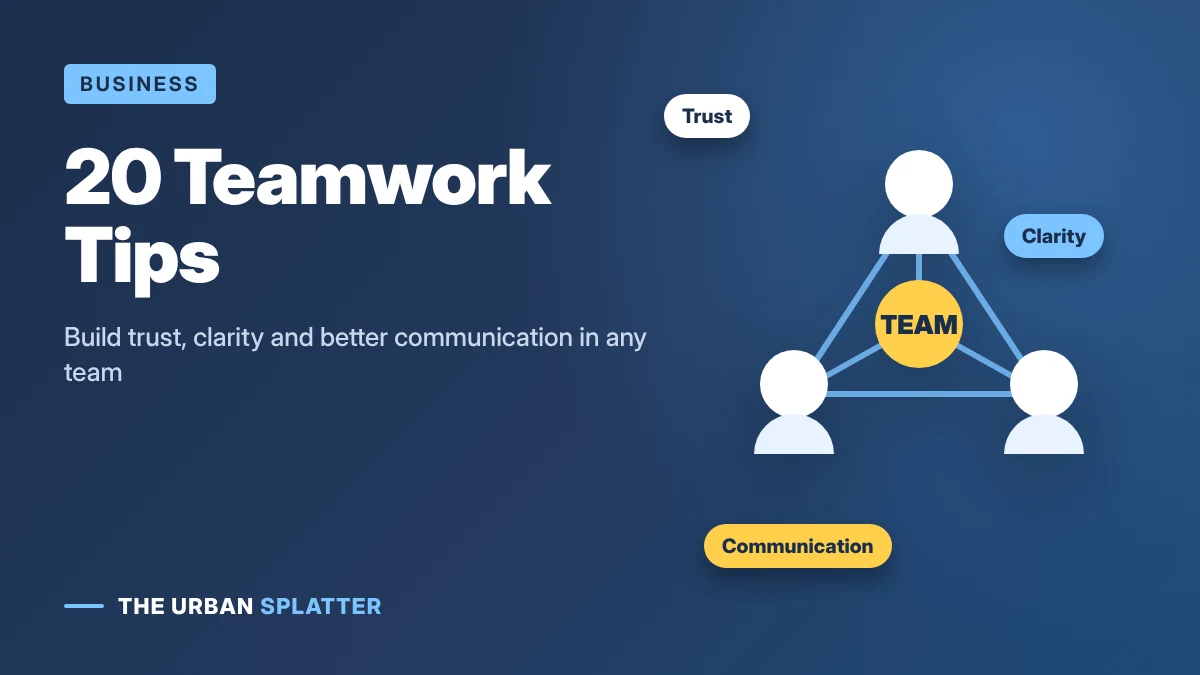
Good teamwork does not depend on hiring the perfect people. It depends on how people work together: whether they feel safe speaking up, know what is expected and can rely on each other. This guide shares 20 practical teamwork tips grouped by theme, what Google’s research found about effective teams, the stages every team goes through, key teamwork skills and how to improve teamwork in remote teams.
In this article
What Makes Teamwork Work?
Google’s Project Aristotle studied 180 of its own teams to find out what made some more effective than others. According to Google re:Work, how team members work together mattered more than who was on the team. Five dynamics stood out, in this order:
| Dynamic | What it means |
|---|---|
| 1. Psychological safety | People feel safe to ask questions, admit mistakes and share ideas without fear of embarrassment. |
| 2. Dependability | Teammates finish quality work on time. |
| 3. Structure and clarity | Everyone knows their role, goals and how work gets done. |
| 4. Meaning | The work matters personally to each member. |
| 5. Impact | People believe their work makes a difference. |
Factors such as team size, seniority and whether people sat together were not strongly linked to effectiveness in that research. The tips below are built around these five dynamics.
20 Teamwork Tips
Build trust and safety
- Admit your own mistakes first. When leaders say “I got that wrong,” others feel safe doing the same.
- Thank people for raising problems. Reward the person who flags an issue early, even if the news is bad.
- Ask quieter teammates directly. “Priya, what do you think?” brings in voices that might stay silent.
- Keep your word. Small promises kept, such as sending notes when you said you would, build trust fast.
- Repair quickly after conflict. Address tension early and apologize when you are wrong. Here is how to apologize in a way that rebuilds trust.
Communicate clearly
- Agree on where things are discussed. For example: urgent issues by call, decisions in one shared channel, updates by email.
- Write decisions down. A two-line summary after each meeting prevents “I thought we agreed…” moments.
- Give feedback little and often. Short, specific feedback is easier to act on than a big review once a year. Here is how to give constructive criticism that helps.
- Listen to understand. Repeat back what you heard before replying: “So the main concern is the deadline?”
- Keep meetings purposeful. Share an agenda, start on time and end with clear next steps.
Make roles and goals clear
- Set one shared goal. Everyone should be able to say what the team is trying to achieve this quarter.
- Define who owns what. Name one owner for each task, even if several people help.
- Agree on priorities together. When everything is urgent, sort tasks by what is urgent and what is important. The Eisenhower Matrix is a simple way to do this as a group.
- Use a shared task board. A visible list of who is doing what reduces duplicated work.
- Check workloads regularly. Ask “Does anyone have too much on?” before taking on new work.
Build team habits
- Celebrate wins, big and small. A quick shout-out in a meeting shows people their work matters.
- Share the “why.” Explain how each project helps customers or the business, so the work feels meaningful.
- Run short retrospectives. After a project, ask: what went well, what didn’t and what will we change?
- Learn from each other. Short skill-sharing sessions build respect and spread knowledge.
- Make time to connect. Five minutes of icebreaker questions or a team lunch helps people see each other as people.
The 5 Stages of Team Development
Psychologist Bruce Tuckman described four stages of group development in 1965 and added a fifth with Mary Ann Jensen in 1977, as summarized on Wikipedia. Knowing the stage your team is in helps you choose the right teamwork tips:
| Stage | What happens | What helps |
|---|---|---|
| Forming | People meet and work cautiously | Clear goals, roles and introductions |
| Storming | Disagreements and tension appear | Open discussion and agreed ways of working |
| Norming | Trust grows and habits settle | Regular feedback and shared routines |
| Performing | The team works well with little supervision | Autonomy, stretch goals and recognition |
| Adjourning | The project ends and the team splits up | Celebrate, reflect and capture lessons learned |
Key Teamwork Skills
Strong teams are built from individuals with these teamwork skills:
- Communication: sharing ideas clearly and listening well.
- Reliability: doing what you said you would, on time.
- Flexibility: adapting when plans or roles change.
- Conflict resolution: disagreeing respectfully and finding a way forward.
- Self-awareness: knowing how your habits affect others. It is one of the core intrapersonal skills.
- Giving and receiving feedback: helping each other improve without blame.
Teamwork Tips for Remote Teams
- Over-communicate context. Remote teammates miss hallway chats, so share the reasons behind decisions in writing.
- Respect time zones. Rotate meeting times and record key meetings for those who cannot attend.
- Use cameras for discussion, not every call. Video helps in debates and one-to-ones; audio is fine for quick updates.
- Create informal moments. A weekly social call or a “wins” channel replaces office small talk.
Signs Your Team’s Teamwork Needs Work
- The same few people do all the talking in meetings.
- Mistakes are hidden until it is too late to fix them.
- People are unsure who owns key tasks.
- Deadlines slip because work is duplicated or forgotten.
- Disagreements turn personal or are avoided completely.
Pick one or two tips that address your biggest gap, try them for a month and then review together.
Frequently Asked Questions
How can I improve teamwork at work?
Start with clarity and safety: agree on a shared goal, name an owner for each task and make it normal to ask questions and admit mistakes. Then build regular habits such as short retrospectives and feedback.
What is the most important part of teamwork?
In Google’s Project Aristotle research, psychological safety came first: people need to feel safe speaking up before the other dynamics can work well.
What are quick ways to build teamwork?
Open meetings with a quick question, celebrate one win each week and end every meeting with clear next steps and owners.
Start With One Tip This Week
Great teamwork is built through small, repeated habits. Choose one tip from each section, share them with your team and check in after a month. For more practical guides on work and leadership, explore the latest articles on The Urban Splatter.