
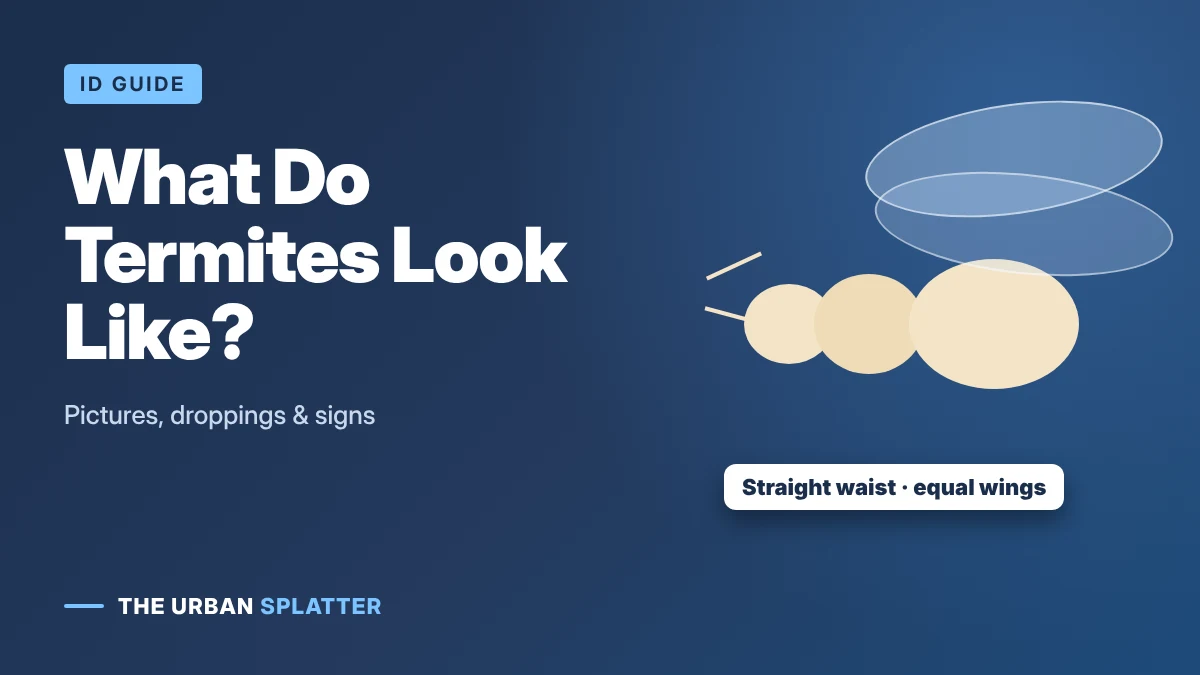
Termites are small, soft-bodied insects about 1/4 to 1/2 inch (6–12 mm) long. Worker termites are pale, creamy white and wingless; swarmers (the winged reproductives) are dark brown or black with two pairs of equal-length wings. Unlike ants, termites have a straight, thick waist and straight antennae. You are more likely to spot their signs, such as mud tubes, discarded wings and pellet-like droppings, than the termites themselves.
In this article
Termite Identification at a Glance
| Feature | What to look for |
|---|---|
| Size | About 1/4 to 1/2 inch (6–12 mm); swarmers slightly longer with wings |
| Color | Workers: pale cream or white; soldiers: pale with a darker, larger head; swarmers: dark brown to black |
| Body | Soft, with a broad waist (no pinch between body sections) |
| Antennae | Straight and bead-like |
| Wings (swarmers) | Two pairs, equal in length, longer than the body; fall off easily |
Termites vs Flying Ants
| Termite swarmer | Flying ant | |
|---|---|---|
| Waist | Thick, straight | Narrow, pinched |
| Antennae | Straight | Bent (elbowed) |
| Wings | Two pairs of equal length | Front wings longer than back wings |
| Wing shedding | Shed wings in piles | Less likely to leave piles |
If you find a pile of identical, shed wings on a window sill in spring, that is a strong sign of termite swarmers.
The Main Types of Termites
Subterranean termites
The most common and destructive type in much of the US. They live in soil and build pencil-width mud tubes up foundations to reach wood. Workers are creamy white; swarmers are dark and usually swarm in spring.
Drywood termites
Found mainly in warm coastal and southern areas. They live inside dry wood, such as furniture, door frames and attic timbers, and do not need contact with soil.
Dampwood termites
Larger termites that prefer wet, decaying wood, often around leaks, logs and damaged timbers.
Formosan termites
An aggressive subterranean species found in parts of the southern US and Hawaii, known for very large colonies.
What Do Termite Droppings Look Like?
Drywood termites push their droppings, called frass, out of small holes in the wood. Frass looks like tiny, hard, oval pellets with six concave sides, about 1 mm long, often in small piles that resemble sawdust, coffee grounds or sand. The color varies with the wood they eat, from light tan to dark brown. Subterranean termites rarely leave visible pellets because they use their droppings to build mud tubes.
Signs of Termites in Your Home
- Mud tubes: thin brown tunnels on foundations, walls or crawl spaces.
- Discarded wings: small piles near windows, doors or light fixtures.
- Frass: small piles of pellets below wooden items.
- Hollow-sounding wood: tap wood with a screwdriver handle; damaged wood sounds hollow.
- Bubbling or peeling paint: can look like water damage.
- Tight doors and windows: damaged frames can warp.
- Tiny holes in drywall: pin-sized holes, sometimes plugged with mud.
- Swarms: many winged insects indoors, often on a warm day after rain.
What to Do If You Think You Have Termites
- Collect a sample: put a few insects or wings in a sealed bag or jar, or take clear photos.
- Do not disturb mud tubes or damaged wood; pros use them to find the colony.
- Contact a licensed pest control company for an inspection.
- Ask about treatment options, such as liquid soil treatments, bait systems or (for drywood termites) spot or whole-structure treatment.
- Fix moisture problems, such as leaks and poor drainage, that attract termites.
How to Prevent Termites
- Keep firewood, mulch and wood piles away from your foundation.
- Fix leaking pipes, gutters and air-conditioning drips.
- Make sure soil slopes away from the house so water drains away.
- Leave a gap between soil and wooden siding or decks.
- Schedule a professional termite inspection every year if you live in a high-risk area.
Frequently Asked Questions
What do termites look like to the naked eye?
Workers look like tiny, pale, soft-bodied ants with straight antennae. Swarmers look like small dark insects with long, see-through wings.
What does termite poop look like?
Drywood termite droppings are tiny six-sided pellets that pile up like sawdust or coffee grounds near holes in wood.
Are termites dangerous to people?
Termites do not usually bite people or spread disease, but they can cause costly damage to wooden structures.
What time of year do termites swarm?
Many subterranean termites swarm in spring, often on warm days after rain. Some species swarm in summer or autumn.
The Bottom Line
Termites are small, pale, soft-bodied insects, while their swarmers are dark with long, equal-length wings. Watch for mud tubes, discarded wings and pellet-like droppings, and call a licensed pest professional if you see signs. For more home guides, visit The Urban Splatter.