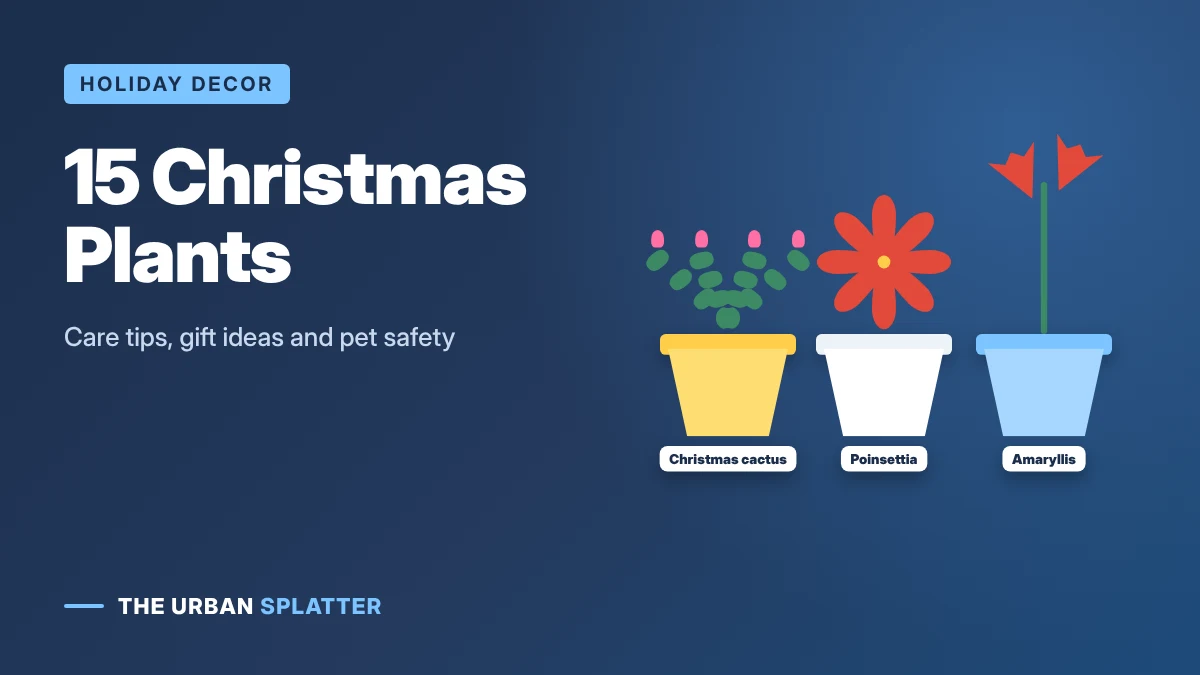
Christmas plants bring color and life indoors when the garden is asleep. Outdoors, now is the time to learn how to overwinter dahlias. Some, like the Christmas cactus and amaryllis, can bloom again year after year; others are best enjoyed for one season. This list covers 15 popular holiday plants, how to care for each one and which are safe around cats and dogs, so you can pick the right plant to decorate with or give as a gift.
In this article
Christmas Plants at a Glance
| Plant | Best for | Pet safety |
|---|---|---|
| Christmas cactus | Long-lived gift | Non-toxic |
| Moth orchid | Elegant, long-lasting gift | Non-toxic |
| Rosemary tree | Kitchens and small spaces | Non-toxic |
| Poinsettia | Classic red color | Mildly toxic |
| Holly | Wreaths and garlands | Low toxicity |
| Amaryllis | Big, dramatic flowers | Toxic |
| Paperwhites | Fragrance and quick blooms | Toxic |
| Cyclamen | Cool rooms and windowsills | Toxic |
| Mistletoe | Doorways (out of reach) | Toxic |
Pet safety notes are based on the ASPCA toxic and non-toxic plant list and Penn State Extension. Always check the ASPCA database for a specific plant if you have pets.
15 Christmas Plants and How to Care for Them
Care temperatures below are based on the holiday plant guide from UMass Amherst Extension and University of Minnesota Extension.
1. Poinsettia
Euphorbia pulcherrima. The classic red Christmas plant. Its colored “petals” are bracts, and they stay bright for weeks with good care. Here is our full guide to poinsettia care.
- Care: Bright light, 60 to 70°F, water when the soil surface is dry, and keep away from drafts.
- Pets: Mildly toxic. The sap can upset the stomach.
2. Christmas cactus
Schlumbergera. A long-lived plant with arching stems and pink, red, white or orange flowers at the tips. With care, it can bloom every holiday season for decades.
- Care: Bright light, 60 to 70°F, water when the top inch of soil is dry. Cool nights and shorter days in autumn help it set buds.
- Pets: Non-toxic to cats and dogs, according to the ASPCA.
3. Amaryllis
Hippeastrum. Huge trumpet flowers on tall stems, sold as bulbs or kits. It is a favorite gift because it is so easy to grow.
- Care: Pot with the top third of the bulb above the soil, keep at 65 to 70°F in a sunny spot and water sparingly until growth starts. It blooms about 6 to 8 weeks after potting.
- Pets: Toxic to cats and dogs.
4. Paperwhites
Narcissus papyraceus. Clusters of fragrant white flowers that grow in a bowl of pebbles and water. They need no chilling, so they are perfect for last-minute decorating. Paperwhites are also the December birth flower.
- Care: Bright light and cool temperatures (50 to 65°F); keep water touching the base of the bulbs.
- Pets: Toxic, especially the bulbs.
5. Cyclamen
Cyclamen persicum. Swept-back flowers in red, pink or white above heart-shaped, silver-marked leaves.
- Care: Keep it cool (50 to 65°F) in bright, indirect light. Keep the soil evenly moist and water from the bottom to avoid rotting the crown.
- Pets: Toxic, especially the tuber.
6. Kalanchoe
Kalanchoe blossfeldiana. A tough succulent covered in clusters of small red, orange, yellow or pink flowers.
- Care: Bright sun, 60 to 75°F, and water only when the soil is dry.
- Pets: Toxic to cats and dogs.
7. Christmas rose
Helleborus niger. Despite its name, it is not a rose. Its white winter flowers are often sold in pots for the holidays and can be planted outdoors in many climates afterward.
- Care: Cool, bright spot indoors; plant it in part shade outside after the holidays.
- Pets: Toxic.
8. Norfolk Island pine
Araucaria heterophylla. A soft, tiered evergreen that works as a living mini Christmas tree and a houseplant all year.
- Care: Bright light, moderate watering and plenty of humidity. Use only light ornaments.
- Pets: Check the ASPCA list before buying if you have pets.
9. Rosemary tree
Salvia rosmarinus. Rosemary sheared into a cone looks like a tiny tree, smells wonderful and doubles as a kitchen herb.
- Care: The sunniest window you have, well-drained soil, and water when the soil is dry. Do not let it dry out completely.
- Pets: Non-toxic to cats and dogs, according to the ASPCA.
10. Holly
Ilex. Glossy leaves and red berries for wreaths, garlands and table centerpieces.
- Care: Cut branches last a week or two in water. Potted hollies can be planted outside after the holidays.
- Pets: Low toxicity, but the berries can cause stomach upset.
11. Mistletoe
Viscum album, Phoradendron. The traditional plant to hang in a doorway. It is usually sold as cut sprigs.
- Care: Hang it out of reach and replace it if it dries out.
- Pets: Toxic. The berries are the main concern.
12. Moth orchid
Phalaenopsis. Elegant white or red orchids make a modern, long-lasting holiday gift. A single flower spike can bloom for months.
- Care: Bright, indirect light, and water when the potting bark is almost dry.
- Pets: Non-toxic to cats and dogs, according to the ASPCA.
13. Red anthurium
Anthurium andraeanum. Glossy red heart-shaped flowers that last for weeks and look festive all season.
- Care: Bright, indirect light, warm temperatures and evenly moist (not wet) soil.
- Pets: Toxic. It can irritate the mouth.
14. English ivy
Hedera helix. Trailing ivy is a traditional winter greenery, lovely around candles (not lit ones) or trained into a wreath shape.
- Care: Bright, indirect light and cool rooms. Let the top of the soil dry between waterings.
- Pets: Toxic.
15. Dwarf Alberta spruce
Picea glauca ‘Conica’. A small, cone-shaped conifer sold in pots as a living Christmas tree for tables and porches.
- Care: Keep it indoors for only a week or two in a cool, bright spot, keep the soil moist, then move it outside.
- Pets: Check the ASPCA list before buying if you have pets.
Holiday Plant Care Tips That Work for All of Them
- Remove the foil. Decorative foil and sleeves trap water around the roots. Take them off or cut a hole in the bottom so water can drain.
- Never leave pots standing in water. Empty saucers after watering. Soggy soil is the most common way holiday plants die.
- Check them often. In a cool home, most holiday plants need water about once a week, but check the soil every few days.
- Avoid hot and cold spots. Keep plants away from heating vents, fireplaces, radiators and drafty doors.
- Give them light. Most flowering holiday plants last longer near a bright window.
Which Christmas Plants Last After the Holidays?
| Plant | What happens next |
|---|---|
| Christmas cactus | Keep it as a houseplant. It can rebloom every year with cool autumn nights. |
| Amaryllis | Cut off the faded flower stalk but keep the leaves growing so the bulb can bloom again next year. |
| Poinsettia | Can be kept as a green houseplant, or brought back into color with a long-night treatment in autumn. |
| Rosemary | Keep pruning and cooking with it; it can go outside in spring. |
| Moth orchid | A long-lived houseplant that reblooms with bright light and a cooler period. |
| Christmas rose, potted holly, dwarf Alberta spruce | Plant outdoors in spring where hardy. |
| Paperwhites, cyclamen, kalanchoe | Usually enjoyed for one season; paperwhite bulbs are composted after flowering. |
Christmas Plant Gift Ideas
- For a beginner: a Christmas cactus or a kalanchoe, both forgiving and low-maintenance
- For a cook: a rosemary tree in a festive pot
- For pet owners: a Christmas cactus or moth orchid, both non-toxic to cats and dogs
- For someone who loves to watch things grow: an amaryllis bulb kit or a bowl of paperwhite bulbs
- For a classic look: a poinsettia in a ceramic pot (remove the foil)
Frequently Asked Questions
What is the most popular Christmas plant?
The poinsettia is the best-known Christmas plant. Christmas cactus, amaryllis and holly are also very popular.
Which Christmas plants are safe for cats?
According to the ASPCA, Christmas cactus, moth orchids and rosemary are non-toxic to cats and dogs. Lilies, which sometimes appear in holiday bouquets, are extremely dangerous to cats.
Why is my Christmas cactus dropping buds?
Bud drop usually comes from a sudden change, such as moving the plant, a cold draft, a hot vent or letting the soil dry out completely.
Can I keep my Christmas plants alive all year?
Yes, for many of them. Christmas cactus, amaryllis, orchids and rosemary can all live for years with basic care.
Bring the Season Indoors
Pick one or two Christmas plants that suit your home and how much care you can give, and they will brighten the whole season. Still choosing a tree? Compare Fraser fir vs Douglas fir. For more holiday and home guides, explore the latest articles on The Urban Splatter.