Constructive criticism is feedback that points out a problem and helps the other person improve, delivered in a specific, respectful way. Done well, it builds trust and better work. Done badly, it feels like an attack. This guide explains what constructive criticism is, how to give constructive criticism step by step, the SBI feedback model, whether the “feedback sandwich” works, real examples and how to take criticism without getting defensive.
In this article
What Is Constructive Criticism?
Constructive criticism is honest feedback about what someone could do better, focused on specific behavior and paired with a clear way forward. It is meant to help, not to blame. The test is simple: after hearing it, does the person know exactly what to change?
| Constructive criticism | Destructive criticism | |
|---|---|---|
| Focus | Specific behavior or work | The person’s character |
| Example | “The report was missing the sales figures.” | “Your work is sloppy.” |
| Goal | Help them improve | Vent frustration or win |
| Next step | Clear and practical | None |
| Setting | Private, at a good time | Often public or in the heat of the moment |
How to Give Constructive Criticism in 6 Steps
- Check your intent. Make sure the goal is to help, not to vent. If you are angry, wait until you are calm.
- Choose the right time and place. Give feedback privately, soon after the event, and when the person has time to listen.
- Be specific. Describe what happened, not a pattern you have assumed: “In Tuesday’s meeting, you talked over Sam twice,” not “You always interrupt.”
- Explain the impact. Say why it matters: “Sam stopped sharing ideas after that.”
- Ask for their view. There may be context you are missing: “How did the meeting feel from your side?”
- Agree on a next step. End with something concrete: “Could you let others finish before jumping in next time?”
The SBI Feedback Model
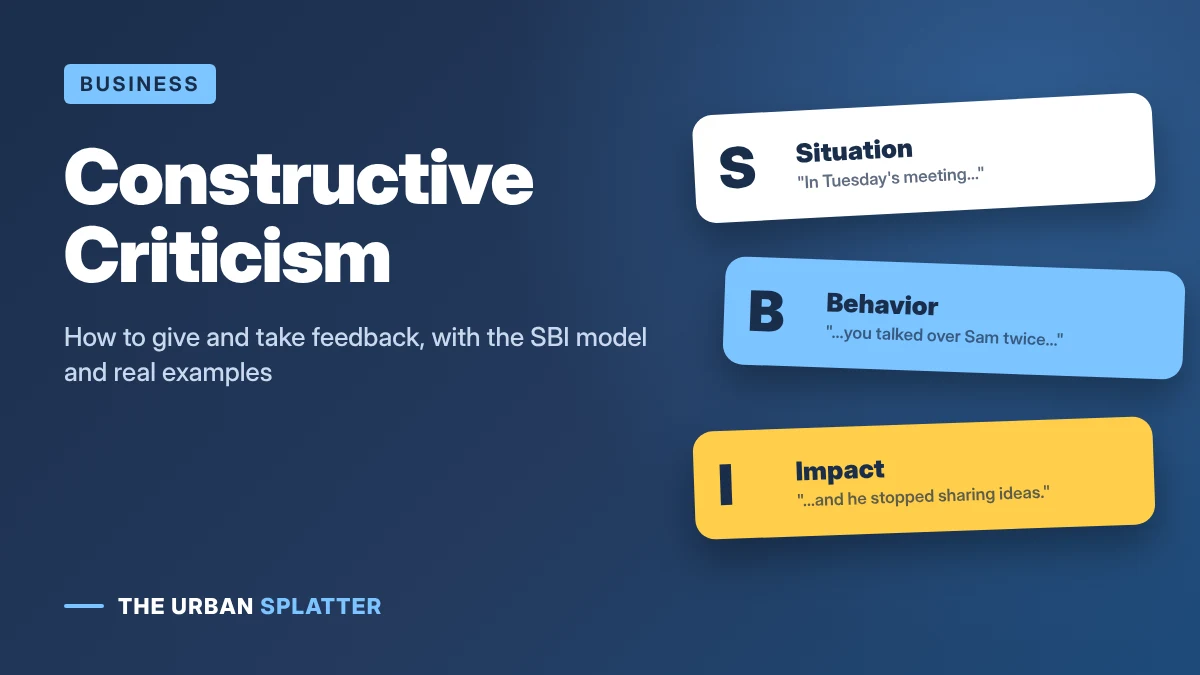
A simple way to structure feedback is the SBI model (Situation, Behavior, Impact), developed by the Center for Creative Leadership. It keeps feedback factual and free of judgment:
| Step | Example |
|---|---|
| Situation | “This morning at the 11 a.m. team meeting…” |
| Behavior | “…you interrupted me while I was presenting the monthly budget…” |
| Impact | “…and I felt frustrated because it broke my train of thought.” |
| Intent (optional) | “What were you hoping to achieve when you jumped in?” |
The Center for Creative Leadership adds the fourth step, Intent, in a version called SBII. Asking about intent turns one-way feedback into a two-way conversation and often reveals a simple misunderstanding.
Does the Feedback Sandwich Work?
The feedback sandwich means placing criticism between two compliments: praise, criticism, praise. It is popular, but it may not work as well as people think.
A 2023 article from Macquarie University notes that there is little research supporting the method, and points to studies suggesting people anchor on the first positive comment and overlook the criticism that follows. One study it cites found that starting with the correction and then adding encouragement worked better than the classic sandwich.
A better approach: give genuine praise when it is earned, on its own, and keep criticism clear and direct when it is needed. If you want to add encouragement, put it after the main point, not before it.
Constructive Criticism Examples
| Situation | What to say |
|---|---|
| Missed deadline | “The project update was due Friday and arrived on Monday, which delayed the client call. What got in the way, and how can we avoid it next time?” |
| Weak presentation | “Your research was strong. The slides had a lot of text, so the key points got lost. Try three bullet points per slide next time.” |
| Messy report | “The report is missing the Q3 figures and has a few typos. Could you add the numbers and do a quick proofread before it goes out?” |
| Coworker interrupting | “In today’s meeting you finished my sentences a couple of times, and I lost my point. Could you let me finish first?” |
| Student essay | “Your argument is clear. Each paragraph needs one piece of evidence to back up its main claim.” |
| Friend or partner | “When plans change last minute, I feel let down because I’ve planned around them. Can you give me a heads-up earlier?” |
Phrases to Use and Avoid
| Try | Avoid |
|---|---|
| “I noticed that…” | “You always…” or “You never…” |
| “The impact was…” | “Everyone thinks…” |
| “What do you think happened?” | “Why would you do that?” |
| “Next time, could you…?” | “Just do better.” |
| “I’d like to help with…” | “No offense, but…” |
How to Take Constructive Criticism
Receiving criticism well is a skill too. Taking feedback calmly is one of the core intrapersonal skills, and it gets easier with practice:
- Pause before reacting. Take a breath. Your first reaction is often defensive.Strong reactions to fair feedback can sometimes be a sign of projecting.
- Listen to understand. Focus on what is being said, not on preparing your reply.
- Ask for specifics. “Can you give me an example?” makes vague feedback useful.
- Say thank you. Giving feedback is uncomfortable. Thanking them keeps it coming.
- Separate the message from the delivery. Even poorly worded feedback can contain a useful point.
- Follow up. Make the change, then check back, If the feedback shows you made a mistake, here is how to apologize well: “I tried what you suggested. Is it better?”
Frequently Asked Questions
What is an example of constructive criticism?
An example is: “Your presentation had great data, but the slides were text-heavy. Try three key points per slide next time.” It names the issue, keeps it about the work and gives a clear fix.
How do you give constructive criticism to your boss?
Ask permission first (“Can I share a thought on the project process?”), focus on shared goals and suggest a solution rather than only naming the problem.
Is constructive criticism the same as negative feedback?
Not quite. Negative feedback points out a problem. Constructive criticism also explains why it matters and how to improve, which makes it more useful.
How often should you give feedback?
Little and often works better than saving it all for an annual review. Regular, kind feedback is one of the simplest teamwork tips. Quick feedback soon after an event is easier to act on.
Make Feedback a Habit
Constructive criticism works best when it is specific, kind and regular. Use the SBI model, end with a clear next step, and take feedback with the same openness you hope others will show you. For more practical guides on work and communication, explore the latest articles on The Urban Splatter.